
How to Start a Podcast in 2026: A Complete Beginner’s Guide
Essential Tools & Equipment for Starting a Podcast in 2026
Wondering how to start a podcast and unsure where to get the info you need? You're in luck, because we’re here to help you sift through everything you need to create a podcast. It seems easy enough, especially if your topic is something you’re truly passionate about. And it honestly doesn’t need to be difficult. Still, you’ll need to exert extra effort to produce great quality audio and video, with value-driven content that grabs the attention of listeners and viewers and, hopefully, converts them into loyal followers.
How to Start Podcasting: Things You Need to Do
Define Your Theme
To start a podcast, you need to establish what it is about in the first place. A well-defined topic helps you reach your target audience more easily, and puts your podcast on the radar of those most interested in your discussions and ideas.
A general topic sounds good in theory because it might reach a wider audience. However, you’re likely to get better results with themes that are more specific (“Romantasy on Kindle Unlimited” vs “Books”) because they give your would-be listeners enough information to muster interest from the start.
Finding your niche can be quite challenging when you’re planning to make your own podcast, but once it’s fully established, you’ll find it easier to move confidently onto the next steps.
Identify Your Audience
The next step is determining who you want to reach with your specified theme. Knowing your target market makes it easier to come up with topic ideas that will resonate or, at the very least, pique their curiosity.
When you create a podcast, connecting with your listeners is a goal that you’ll hit more easily if you know what they’re interested in and the best way to give them the info they’re looking for.
Choose the Format
When you’re thinking about how to start podcasting, you should also consider how you’ll present your content. Will you do it solo, or with a co-host? You can also get more people to form a panel for livelier discussions, or call guests for interviews during the podcast, so it’s worth thinking about practical details like your podcast recording space and seating options.
Doing it solo shows your authority on the subject and gives you full power to steer the topic to the direction you want. If you’re not comfortable talking alone, having a partner to banter with might be a better idea when you’re just beginning a podcast. You'll also want to decide on episode length — shorter episodes (20–30 minutes) tend to suit interview and news formats, while deep-dives can run longer.
Podcast Artwork
This is the face of your podcast on social media and elsewhere online, so you want it to stand out and grab the attention of potential listeners. Great artwork can also have the power to pique the interest of those outside your target demographic, possibly increasing the reach of your podcast. Keep in mind that artwork appears small in podcast directories, so bold, simple designs with clear text tend to work best.
Get the Necessary Equipment
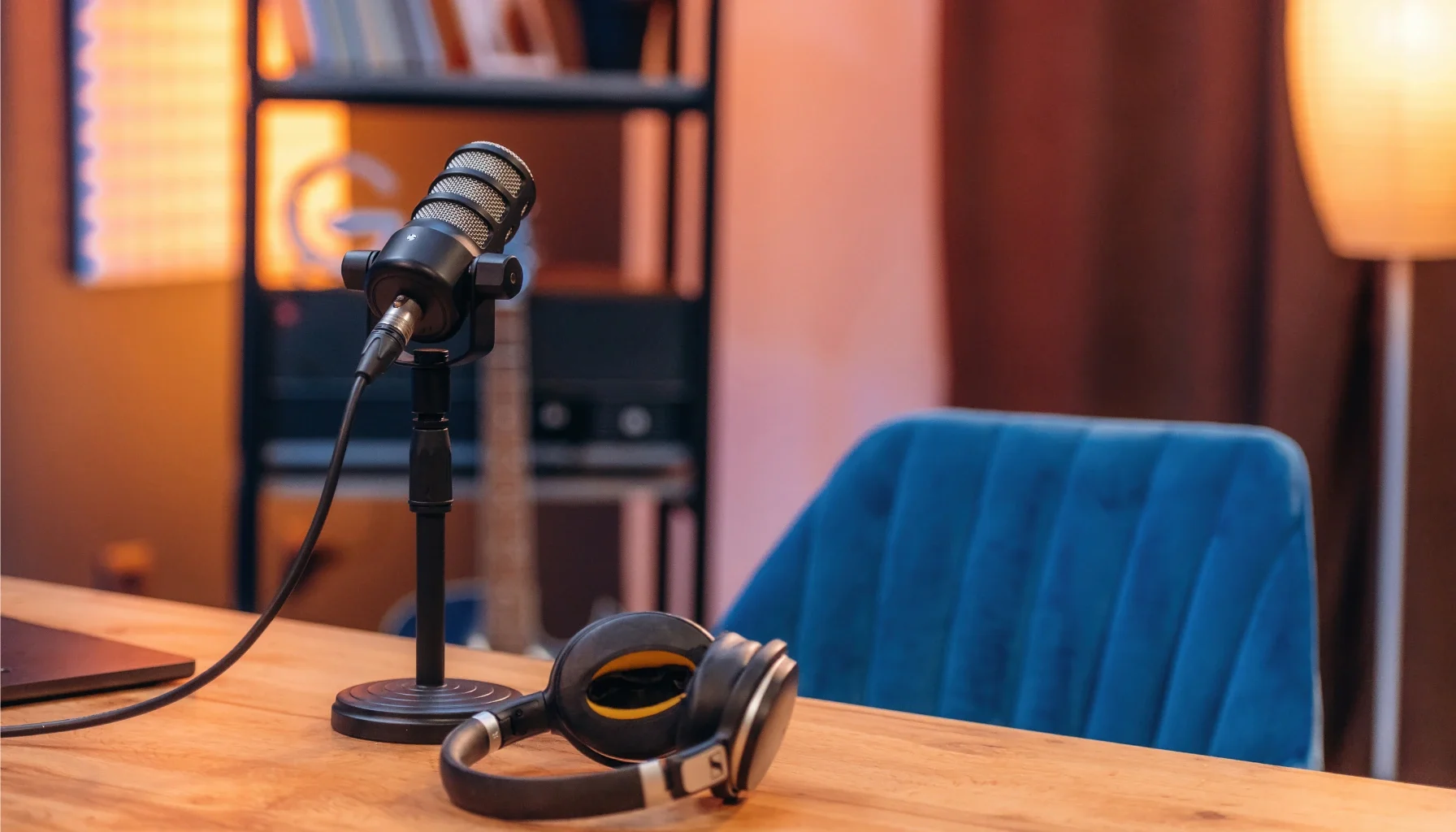
How do you start a podcast? Definitely, you will need a microphone. And not just any mic – you need a high-quality one that will make your podcast sound more professional rather than amateurish. The good news is, there are affordable options so you don’t need to break the bank for this investment.
USB microphones are great if you’re planning to make your own podcast because they’re affordable and convenient to use. The dynamic mic options are less sensitive to background noise, so you don’t need to spend a long time editing unwanted sounds out of your podcast. Meanwhile, XLR microphones offer the most flexibility, but they’re typically more expensive USB types.
Closed-back, over-ear headphones are strongly preferable for noise isolation and to keep your ears comfortable during podcast recording. You also need a microphone stand and a pop filter, and then you’re all set with the basic kit for podcasting as a beginner.
Do you want to try how to create your own podcast and don’t want to buy equipment yet? At Ancoats Podcast Studio in Manchester, we offer the professional-grade gear and expert technical support that you need, so you can focus solely on doing your recording.
Record the Debut Episode
It’s time to record your first episode! When beginning a podcast (and even afterwards), it’s a great idea to have notes, an outline, or even a full-on script that can help you stay on track while recording.
Choose a quiet room so you can record with minimal distractions, preferably with curtains, carpet, and other furniture all around to soak up any echo.
Make sure that you have the necessary equipment and software fully set up first before starting the recording session. You can start with a short test clip to find the best mic angle and position before proceeding to the rest of the episode.
Alternatively, you can visit Ancoats Podcast Studio in Manchester, where all the equipment you need is set up in an acoustically-treated recording environment for professional audio that’s free of background noise. Book your recording session now.
Edit the Recording
When you're thinking about how to start podcasting, you also need to include editing software in your list of essentials. You'll use it to clean up your audio, structure your content, and remove anything that doesn't serve the listener. Podcast editing software doesn’t cost a lot. There are also free options that you can try first if you’re not ready to spend money at this stage.
While editing, you can include an introduction (with or without music) to draw listeners in and give them a taste of what your podcast is all about. Another great addition is an outro to wrap things up cleanly at the end of each episode.
You can edit the content for clarity and engagement, after which you can proceed to getting rid of unwanted noise in the background, so your listeners can focus on your thoughts without distractions.
Choose a Hosting Platform
After recording and editing your audio, it now needs a platform that can showcase your content to listeners. When you create a podcast, the hosting platform will give you an RSS feed that you can then use for submitting your content to directories you choose, such as Apple Podcasts and Spotify. You can also choose one with built-in features that let your podcast automatically show up on different platforms.
After uploading the episode, make sure to pick a category and sub-category for your content. This will make it easier for your target audience to search for and ultimately, discover your podcast.
Launch Your Podcast
Now that you’re done with recording, editing, and uploading the podcast, it’s time to formally launch it! Building a little buzz among friends and family beforehand can help drive those crucial early listens. Or, you can go low-key without a grand launch and simply post the episodes regularly for listeners to enjoy.
Conclusion
When you’re considering how to start a podcast from scratch, things might seem a bit overwhelming. However, with proper guidance and the right tools in place, you can easily create a podcast for the goal you want to achieve. Whether it’s to generate income, to establish yourself as an authority in your industry, or to simply showcase your passion, making your own podcast is actually more straightforward than you first imagined.
FAQs
-
A podcast is a series of audio (or video) episodes that listeners can stream or download, typically via apps like Spotify or Apple Podcasts.
-
Yes. Even if you don’t have prior experience on how to make a podcast, you can successfully do it by having the right equipment, deciding on a theme, and maximising your podcast hosting platform to publish your content.
-
They are available on streaming apps like Apple Podcasts and Spotify. You can also find them via social media posts, such as when snippets of their episodes are shared or reposted by subscribers.
-
Consistency is key to success in podcasting, so it’s crucial to release episodes regularly. Some creators release episodes daily, though weekly or fortnightly is more sustainable for most beginners.
-
Yes. You can use Spotify for Creators to host, publish, and distribute your audio or video podcasts without spending anything. It can also be used for editing, recording, and monetisation, and allows unlimited hosting if you’re thinking of how to make a podcast for free. However, features and terms may change, so check Spotify for Creators for the latest.
-
There are different ways to earn from them. If you’re planning to create a podcast, you can make it profitable through affiliate marketing and sponsorships, or by selling your own products on each episode. You can also earn by interacting with your audience or granting early access to content, such as what’s done in Patreon.
Need a hand with your podcast?
If you need help with audio and video, editing or promotion, Ancoats Podcast Studio has got you covered. Prices start from £100 per hourly session. You’ll get access to 3 Sony A7III cameras which provide crystal-clear visuals, and 4 RØDE PodMics, designed specifically for podcasters. These mics have a built-in pop filter to minimise sound disturbances, and the entire studio is acoustically treated to eliminate background noise.
You’ll get technical support and editing advice from our expert studio manager, and at the end of your session we’ll make sure we get your files to you with a Google Drive link.
If you’d like to make a booking or just want further information, contact us today at hello@ancoatspodcaststudio.co.uk.
